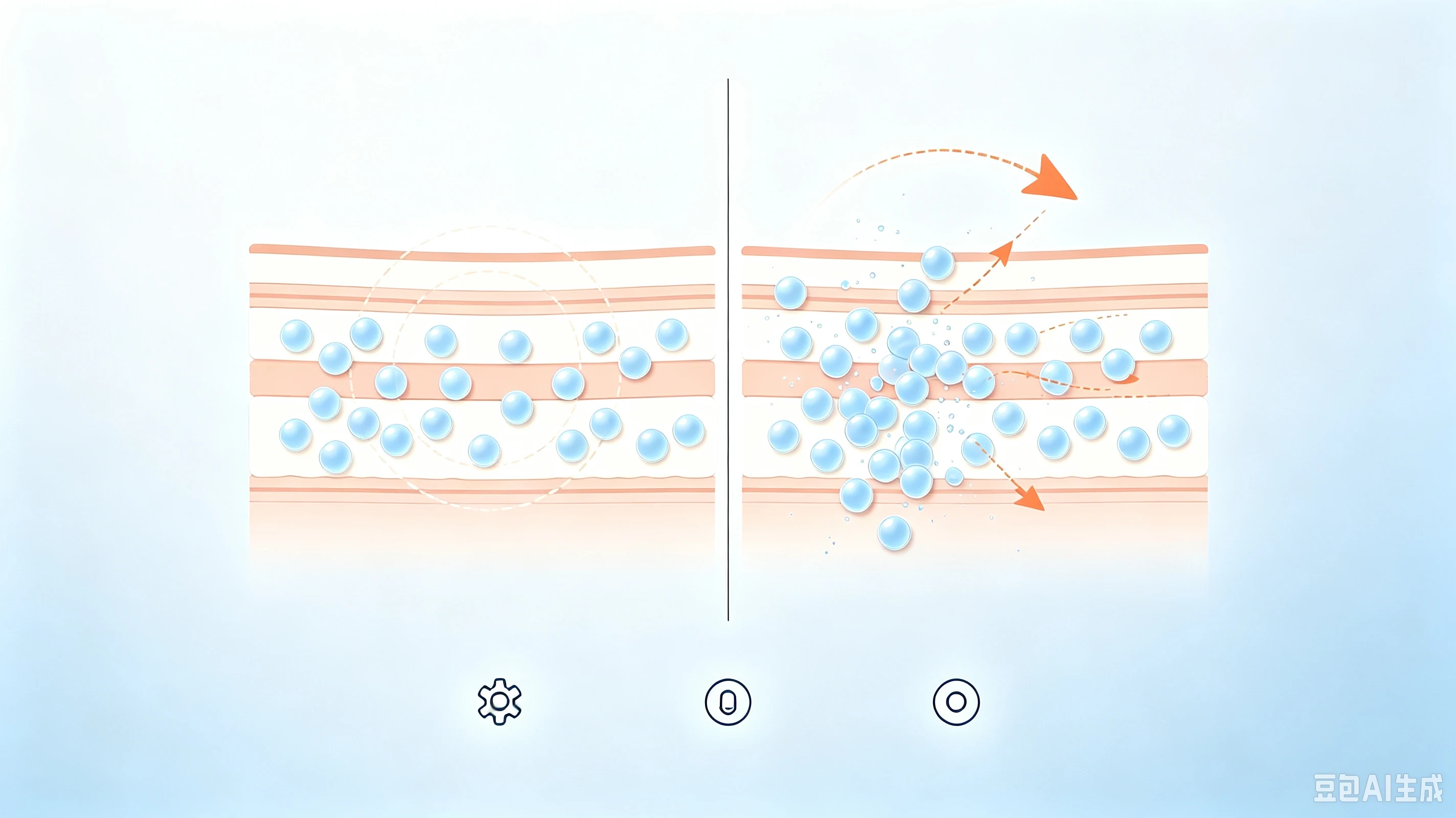
1 Understanding Migration
On social media, consumers frequently encounter discussions about "filler migration," "sausage lips," or "over-filling." Such content can easily cause anxiety, but not every post-treatment swelling or unnatural appearance equals true migration.
Understanding the concept of filler migration helps consumers view HA fillers more rationally, rather than being influenced solely by sensationalized cases.
Filler migration generally refers to the product not staying in the intended area but instead spreading or moving into surrounding tissue, resulting in an appearance that does not match the original treatment goal.
It may present as blurred local boundaries, abnormal fullness, unnatural bulges, or changes in proportion — but the specific situation must be assessed by a qualified professional.
No. Swelling in the early stages after injection is a common reaction, especially in dynamic and sensitive areas like the lips. The appearance during the swelling phase may look more pronounced than the final result.
Consumers should not immediately conclude that migration has occurred right after injection. True migration requires assessment based on timing, texture, changes in appearance, and professional evaluation.
2 Causes: Product, Technique & Planning
Factors that can affect migration risk include inappropriate product choice, inaccurate injection depth, excessive dosage, repeated injections in the same area without proper planning, or improper pressure applied after treatment.
This is why filler products must be chosen by a qualified professional based on the area and tissue conditions, rather than decided by the consumer themselves.
Different areas require different levels of support, softness, and spreadability from a product. If the product's characteristics do not match the area's needs, the final outcome may be less than ideal.
Charmost® content can emphasize the importance of professional product selection, but should never promise that any product is completely immune to migration. A more responsible statement is: the right product and professional technique help reduce the risk of unsatisfactory outcomes.
A qualified professional must determine injection depth, product amount, and overall facial proportions. Over-filling is usually not a shortcut to natural results — on the contrary, it may increase the risk of an unnatural appearance.
For high-attention areas like the lips, a gradual, conservative approach is usually more suitable for consumers seeking natural results.
No. No product should be promised as completely immune to migration. Risk is managed through the combination of a product matched to the area, correct injection depth and layer, conservative dosage, proper planning, and professional aftercare — not through any single "migration-proof" product.
3 What to Do If You Suspect Migration
If a consumer suspects filler migration, they should not massage, squeeze, or try internet remedies themselves. The safer approach is to contact the treating professional or a qualified medical provider for evaluation.
A professional will determine whether observation, treatment, or adjustment is needed based on the product type, time since injection, local presentation, and individual circumstances.
Summary
Most early post-injection fullness is normal swelling, not migration. True migration — product spreading beyond the intended area — is most often linked to mismatched product choice, incorrect depth or layer, excessive dosage, or unplanned repeat injections. The risk cannot be guaranteed away by any brand, but it is significantly reduced when a qualified professional selects the product, plans conservatively, and evaluates any concern rather than the consumer attempting self-treatment.